
The Group Testing Officer conducts nine tasks over two days of the SSB. Day one usually carries the Group Discussion, Group Planning Exercise, Progressive Group Task, Half Group Task and Group Obstacle Race. Day two carries the Lecturette, Individual Obstacles, Command Task and Final Group Task. The order varies slightly between boards, but the sequence below is the common one.
Why the order matters more than the list
Almost every candidate arrives able to recite the nine tasks. Far fewer understand that the sequence is itself part of the design. The GTO sees you first in a seated discussion, then on your feet planning, then working with material, then racing, then alone, then commanding. Each setting removes a different form of cover.
In the Group Discussion you can be articulate without being useful. On the Progressive Group Task you cannot — the obstacle either gets crossed or it does not. By the Command Task, the officer has watched you for a day and a half and knows precisely which of your behaviours are habitual and which were assembled for the occasion.
This is why preparation aimed at individual tasks tends to disappoint. The assessment is longitudinal. What is being built is a picture of one person behaving consistently across nine different pressures.
Day one on the ground
1. Group Discussion
The group is seated in a semicircle and given a topic, usually with a second topic following. There is no chairman, no formal turn-taking and no summing up demanded. The group simply talks for the allotted period.
What is being read here is social effectiveness: whether you can enter a conversation without shouldering someone aside, hold a position under disagreement, and change your mind when the argument warrants it. Candidates lose ground by treating it as a debate to be won. The group discussion has its own guide here.
2. Group Planning Exercise
Often called the military planning exercise. A model laid out on a board or sand table presents a situation containing several problems at once — an injured man, a vehicle to be recovered, a message to be delivered, a river to be crossed, all against a clock and with limited resources.
The GTO narrates the situation, the group reads it in silence, each candidate writes an individual solution, and then the group discusses its way to a common plan. One member narrates the agreed plan at the end.
The written solution matters. It is the only place in the whole GTO series where your unaided reasoning is recorded on paper, and it is read. Prioritisation is the quality being examined: a plan that saves the injured man and abandons the vehicle is usually stronger than one that attempts everything and completes nothing.
3. Progressive Group Task
The first outdoor task with structures. A series of obstacles, ordinarily four, rising in difficulty, crossed by the whole group using helping material — planks, a balli, a rope, sometimes a drum.
Rules govern colour marking, load carrying, distance rules for the material and the ground that may not be touched. Most marks are lost not through weakness but through infringements the candidate did not know were infringements. The rules and the common breaches are set out separately.
4. Half Group Task
The group is halved and each half attempts a single obstacle of the same construction as the PGT. The point of splitting is exposure. In a group of nine or ten, a quiet candidate can pass a whole task without doing very much. In a group of four or five, that is no longer possible.
If you have been carried by louder members through the PGT, the HGT is where the board finds out. Half Group Task and Group Obstacle Race are covered together here.
5. Group Obstacle Race
The snake race. Groups compete carrying a rolled load — the snake — over a series of obstacles, and the physical demand is real. Stamina is assessed, but so is what happens to your conduct when you are tired and losing.
Groups that abandon a struggling member to save seconds are read exactly as you would expect. So are individuals who slow their own group and then blame it.
Day two on the ground
6. Lecturette
An individual task. You are handed a card with four topics, given roughly three minutes to prepare, and speak for three minutes to the group on one of them. No notes are carried to the front.
The subject is not what is being marked. The organisation of your three minutes is: an opening that states a position, a body that supports it, and an ending that closes rather than trails off. Preparation method and a practice topic bank are here.
7. Individual Obstacles
Ten obstacles, numbered by difficulty, attempted alone against a three-minute clock. Obstacles may be repeated, and the numbers are the marks — which makes route planning a real decision under time pressure. The ten obstacles and how to plan a run are here.
8. Command Task
You are appointed commander of a single obstacle and invited to choose subordinates from the group. The GTO questions you, alters the problem while you are solving it, and observes what happens to your composure and your instructions.
This is the closest the ground comes to a direct test of command. The subordinate choice and the questioning are explained here.
9. Final Group Task
One last obstacle attempted by the whole group, without appointed leadership. It closes the series and gives the GTO a final look at the group functioning as a group, frequently confirming an impression already formed.
What the GTO is compiling
The nine tasks do not carry nine separate scores that are added up. They are nine opportunities to observe the fifteen Officer Like Qualities, and the ground tasks bear most heavily on the qualities that only appear in physical, social settings — initiative, courage, stamina, ability to influence the group, cooperation, determination.
Three assessors watch you independently. The GTO on the ground, the Interviewing Officer in the interview room, and the psychologist through your written tests reach conclusions separately and only compare them at the Conference. Agreement between them is the strongest signal a board can have, which is why performing a character on the ground is such poor strategy — it has to be sustained across three assessors who never compare notes until the end. How ground behaviour becomes a written assessment is explained here.
How to prepare for the ground
Reading about the tasks establishes vocabulary. It does not establish competence, for the same reason that reading about swimming does not. The specific skills the ground demands — judging whether a plank will span a gap, giving an instruction that four people can act on immediately, keeping your voice level while a structure is failing — are motor and social skills, and they are acquired by repetition.
At SSBOGC we practise the tasks on our own obstacle ground in Dehradun rather than explaining them on a board, and the sessions are conducted by an officer who assessed these tasks at 1 AFSB Dehradun and 4 AFSB Varanasi. The fifteen-day course is described here, and upcoming batch dates are listed here.
Common questions
How many GTO tasks are there in the SSB?
Nine. Group Discussion, Group Planning Exercise, Progressive Group Task, Half Group Task, Group Obstacle Race, Lecturette, Individual Obstacles, Command Task and Final Group Task, conducted across two days.
Are the GTO tasks the same at every selection board?
The nine tasks are common to Army, Navy and Air Force boards. The order, the exact obstacle constructions and the local ground conditions vary. Do not memorise a fixed timetable; be ready for the tasks in any order.
Which GTO task carries the most weight?
None is weighted above the others in the way candidates expect. The Command Task and the Group Planning Exercise tend to reveal the most because both isolate the individual, but a strong showing in one task does not offset an inconsistent picture across the rest.
Can I be rejected on GTO performance alone?
The recommendation is a board decision taken at the Conference, where the GTO’s assessment is one of three. A poor ground assessment is difficult to overcome, but it is not a standalone rejection.
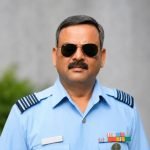
Accelerate Your SSB Recommendation with Guided Practice
Join Group Captain Puneet Sharma at SSBOGC Dehradun for rigorous, personalized training covering all 5 stages of the Selection Board.