The Combined Defence Services examination is a single UPSC written test that feeds four different academies: the Indian Military Academy, the Indian Naval Academy, the Air Force Academy and the Officers Training Academy. Qualifying candidates attend a five-day SSB. The board procedure is identical for all four; what differs is the commission at the end of it.
The four choices, plainly
Indian Military Academy, Dehradun
Permanent commission into the Army. Graduates only. IMA is in Dehradun, a few kilometres from where this is written, and its cut-offs are typically the most competitive of the four.
Indian Naval Academy, Ezhimala
Permanent commission into the Navy. Engineering qualifications are required for several branches, and the eligibility conditions differ from IMA’s.
Air Force Academy, Hyderabad
Permanent commission into the Air Force flying branch. Candidates are tested at an Air Force Selection Board and must additionally clear the pilot aptitude testing, which carries a lifetime-attempt restriction.
Officers Training Academy, Chennai
Short Service Commission, and the only one of the four open to women through this examination. A Short Service Commission runs for a fixed initial term with provision for extension and, in defined circumstances, conversion to permanent.
Age bands, marital status conditions and educational requirements differ between the four and are revised regularly. Take them from the current UPSC notification, not from any summary.
What the SSB involves
Five days, identical in structure across all four academies. Day one is OIR and PPDT screening. Days two to five carry the psychological battery — TAT, WAT, SRT and Self Description — the nine GTO tasks, the personal interview and the Conference.
Air Force candidates attend an AFSB, where the testing runs to the same design with the pilot aptitude battery added for flying-branch aspirants. The AFSB is described in more detail here.
What is different about a CDS candidate
You arrive as a graduate, and the assessment reflects that in what it can reasonably examine.
The interview goes deeper. Three or four years of higher education, possibly work experience, and adult decisions about your own life give the Interviewing Officer far more material than a school-leaver offers. Expect to account for your choices — why that degree, why that job, why leave it.
Career reasoning is examined. A candidate leaving a settled private-sector job is asked why, and the answer needs to be truthful rather than flattering. “I want to serve” delivered without substance is weaker than an honest account of what the current work lacks.
Academic record is context, not credit. A first-class degree does not carry marks at the board. A poor patch that you can explain honestly costs less than most candidates fear.
OTA candidates are assessed identically. There is no lower standard for Short Service Commission. The commission differs; the assessment does not.
Where CDS candidates lose ground
- Treating the SSB as an extension of the written exam. It assesses personality, not preparation, and knowledge earns nothing.
- Over-rehearsed interview answers. Graduates have usually sat job interviews and import a polished register that reads as constructed. The board is not a hiring panel.
- Neglecting the ground. Working candidates are often several years away from any physical activity, and the obstacle race is unforgiving of that.
- Inconsistency between the PIQ and the interview. A longer life produces a fuller form and more opportunities to contradict yourself.
Preparing
Our fifteen-day course covers all five days of the board in sequence, with GTO tasks run on our own ground in Dehradun and interview practice conducted by a former Senior GTO of 1 AFSB Dehradun and 4 AFSB Varanasi. CDS aspirants — including candidates taking leave from work — form a substantial part of every batch. See the course and the batch dates.
Common questions
Is the SSB different for OTA and IMA?
No. The five-day procedure and the assessment standard are the same. The commission granted differs.
Can women appear through CDS?
Through the OTA route, subject to the conditions in the current notification. Women train and are assessed on the same tasks — our batches are mixed for exactly that reason.
Do I choose which board I attend?
No. Allotment follows from the service and academy preferences in your application.
How long after the CDS result is the SSB?
Call-up letters follow the written result, and dates are allotted over the following months. Candidates usually have several weeks of notice.
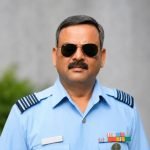
Accelerate Your SSB Recommendation with Guided Practice
Join Group Captain Puneet Sharma at SSBOGC Dehradun for rigorous, personalized training covering all 5 stages of the Selection Board.