Candidates prepare for the tests and improvise the arrival. That is the wrong way round: a missing document can cost you the board before any assessment begins. This is a practical checklist of what to carry and what the first morning involves. Your call-up letter is the authority on all of it — where this differs from that letter, follow the letter.
Documents
Carry originals and photocopies. Boards commonly ask for several photocopies of each, so take more than you expect to need.
- Call-up letter, printed, along with any acknowledgement or online form the letter asks you to submit
- Matriculation certificate — the date of birth proof
- 10+2 certificate and marksheet
- Degree certificate and all semester marksheets, for graduate entries
- Photo identification — Aadhaar, passport, driving licence, PAN
- Passport-size photographs — carry a dozen or more in the specification the letter states
- NCC certificate, for NCC entry candidates, with any grading documents
- Employer’s no-objection certificate, if you are in service
- Previous SSB documentation, if you have attended before
- Caste or category certificate, where applicable
Two practical notes. Keep the originals in one folder rather than distributed through your luggage — you will be asked for them early on a busy morning. And check the photograph specification carefully, because the size and background required are frequently not what you have on hand.
Clothing
You need three sorts of clothing, and candidates routinely under-pack one of them.
Formal. For the interview and the Conference. Shirt, trousers, a tie if you have one, and formal shoes. It need not be expensive; it needs to fit and to be pressed.
Sports kit. For the GTO ground. Two sets, because one will be wet or filthy after the obstacle race. White vests or T-shirts and shorts or tracksuit trousers, plus sports shoes with reasonable grip. Do not bring new shoes to a board.
Casual. For the written tests, the evenings and the waiting, of which there is a great deal.
Boards issue you a chest number worn over your clothing throughout, so nothing needs to be distinctive.
Kit
- Pens — several, and a pencil with an eraser; the writing tests are long and a failing pen mid-TAT is a genuine problem
- A watch, since phones are not available to you during testing
- Toiletries, towel, and a small padlock for your luggage
- Warm clothing for a winter board — Dehradun and the northern boards are cold in December and January
- Any regular medication, in sufficient quantity, with a prescription
- Cash, since not everything at a board is card-friendly
- Spectacles, and a spare pair if you depend on them
The first morning
Reporting is early, and the day is long.
Candidates assemble at the designated point — often a railway station reception at a fixed hour, with board transport onward. Missing that pick-up is a real risk for candidates arriving on the morning train.
At the board there is documentation and verification, allotment of a chest number, and a briefing on the days ahead. Then the OIR papers, followed by PPDT — the picture, the story, the narration and the group discussion.
The screening result is announced the same day. Candidates who are not screened in collect their documents and leave that evening; the rest are allotted accommodation and remain for four more days. Why most candidates go home on day one is discussed here.
Arrive the day before
The single most useful thing in this article. Day one begins early and consists of two timed reasoning papers and a test of perception under pressure — precisely the tasks that a night on a train ruins.
Candidates who arrive on the reporting morning after travelling overnight are competing at a self-inflicted disadvantage. Travel a day early, sleep properly and eat.
This is also why outstation candidates joining our batches at SSBOGC report to Dehradun a day before the course begins, and may ask us to arrange a hostel nearby, separate for boys and girls. See the course, the batch dates, or how to reach us.
Common questions
What documents are required for the SSB interview?
Your call-up letter, matriculation certificate, later educational certificates and marksheets, photo identification, passport photographs, and any entry-specific documents such as an NCC certificate. Carry originals and multiple photocopies, and follow your call-up letter.
How many photographs should I carry to the SSB?
A dozen or more, in the size and background your call-up letter specifies. Candidates run short more often than they run over.
What should I wear to the SSB interview?
Formal clothing for the interview and Conference, sports kit for the ground tasks, and casual clothing otherwise. Two sets of sports kit, since one will be unusable after the obstacle race.
Are mobile phones allowed at the SSB?
Phones are deposited or restricted during testing. Carry a watch, and tell your family you will be largely uncontactable.
What happens on day one of the SSB?
Documentation and chest number allotment, a briefing, then the OIR papers and PPDT. The screening result is announced the same day.
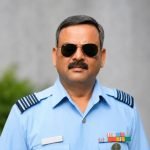
Accelerate Your SSB Recommendation with Guided Practice
Join Group Captain Puneet Sharma at SSBOGC Dehradun for rigorous, personalized training covering all 5 stages of the Selection Board.